
Bits and bobs

Random thoughts about random things by a random person


7 Comments

Coping with cancer: The waiting game (My journey with cancer – Part 8)

Big emotions before some big news

As you may know, I was diagnosed with rectal cancer in February of this year. Due to metastasis to a nearby lymph node it was assessed as stage 3. I did 28 radiation treatments between April 18 and May 28. I started bi-weekly chemo treatments on June 24, ending October 17, for a total of about 400 hours of chemo.

Since October 24, when the chemo-related Grastofil injections ended, I have been in a bit of a state of limbo waiting to find out how well those treatments worked – or not.

This is the week I will find all that out. By Thursday I will know.

So this is a pretty emotional week. It’s been an emotional few weeks leading up to it, to be honest. I even hesitated about writing this post because of all of the emotions going on right now.

Before we get into the meat of things, and you get all worried, let me assure you that while things are pretty heavy right now, they are not always that way.

I’m generally a pretty happy and positive person, even throughout the quagmire that cancer treatments can be. I love to laugh and have fun. At the same time, cancer is some serious shiznit and it’s not always possible to be in a bluebirds-and-rainbows state of mind these days. Shoot…even in regular, every day life, being perpetually happy is not very realistic.

Not to say that I’m in a negative state of mind right now, but I am feeling a lot of things and it really does feel quite heavy.

Helping you help me

If you feel like you want to add a comment or send a text or email to say something supportive, that would be lovely! If you aren’t sure what to say (which is normal), let me help you with that!

The kind of thing I have learned that helps me most is along the lines of “That sucks…that’s a lot to deal with…I wish you didn’t have to go through all this…etc.” It might go against your instincts, but it really does help. 🙂

It turns out that the normal positive platitudes that we all tend to lean towards, such as “You can beat this! You’ll do great! Everything will be fine!”, don’t actually help me. They make me feel worse.

I respect, though, that those types of sayings may be helpful to other folks, so I’m not saying that they aren’t ever appropriate in these situations. Personal journeys are just that – personal and therefore individual so what works for one doesn’t necessarily work for another.

There…That’s done…on we go!

The waiting phase

As I said, I fully completed all my scheduled treatments on October 24 (the end of the Grastofil injections). Since then I’ve been in this waiting-for-results phase.

Annnnnnnnnnnnd…I have learned I am not great at waiting. I was great at the doing – it wasn’t fun and, in different ways and at different times, it was quite difficult and painful, but because I was “doing”, I was mostly OK – not too stressed out, at any rate. I had things to do and side effects to deal with, so I was distracted enough not to be thinking about what would come next. But this whole “nothing left to do but to wait” business is definitely not my forté.

I actually started to feel the stress and pressure of this waiting period two or three weeks before chemo ended. I knew I would need some help navigating this stage so I set up an appointment with my oncology social worker, who had been helpful in earlier stages, before the stress became too heavy.

I keep saying that it’s the waiting phase that is stressing me out. But really, it’s what’s at the end of the waiting that is truly stressful: the results.

These results will tell me if everything worked or if it didn’t and what that means now:

  • Will surgery be required?
  • If so, what are the options?
  • Will a permanent colostomy be required?
  • What’s my overall prognosis?
  • Am I likely to be part of the 75% of those who do this treatment protocol and get to live another 5 years – or (dare to dream) even longer?
  • Or will I be part of the other 25%?

Either way, the emotions come, sometimes one at a time and sometimes in a jumble, and they are all big: hope, fear, worry, gratitude, despair, loneliness, joy…you name it! There’s a big ol’ pot of emotion soup running through my brain and body right now. I feel scared and even terrified one minute and then flip to hopeful and grateful two minutes later before flopping back to scared again. How I haven’t stroked out yet is beyond me!

I’ve been reading Eckhart Tollë’s The Power of Now, but I am definitely not at a point where I can just impassively and neutrally watch emotions come and go. I’m on the roller coaster of emotions more that I probably have ever been in my whole life.

Suffice to say…It’s a lot.

My anchor: Realism combined with hope

In case you don’t know me, I’m not usually one to intentionally borrow trouble. Sufficient is the day and all that. However, these are genuinely huge life impacting questions, so it’s tough to completely avoid thinking about them and what it could all mean for my future. Consequently, it’s very difficult to keep the emotions in check and stable, too.

As with everything else in this journey, I’m not trying to be either optimistic or pessimistic. Instead, I’m shooting for a balanced realism. It is possible that the radiation/chemo got rid of the cancer and it is also possible that they didn’t.

If they did – great! It will still mean very close monitoring (every 2 to 3 months) for the next few years, but it will have bought me some time. If not – well, my day-to-day life will very likely change drastically. Both of those options are very possible outcomes this week.

I am hopeful that it’s the best-case scenario and at the same time, I’m also trying to prepare myself for other alternatives.

How I am coping with it

I have already written a few posts on how I cope with the mental challenges so I won’t go into all those details again here. To give you easy access to potentially helpful ideas, I will link those previous posts below. Here I will just share some things that come to mind now.

As I’ve said in previous posts, I really work to not let the periods of fear, anxiety, and sadness take up permanent residence inside my head. I know from my experiences with depression and anxiety that those two would happily become forever roommates, without even the decency of paying rent, so I consciously work to keep from falling into that kind of cycle.

The further into it you fall, the harder it is to get out, so while I allow myself a certain amount of time to feel what I feel, I also don’t let myself stay in it for too long.

To get out of it, I frequently give myself a task that needs to be done – laundry, organizing a closet, working on a craft, etc. – to get myself out of my head and distracted from those emotions. Watching TV has even helped! The Derry Girls (Netflix) and The Taskmaster (YouTube) have dragged me out of so many moments of sadness with full-on uproarious laughter that I can’t count them. Laughter really does help.

Keeping in touch with the social worker has also been helpful. I can be totally frank with her. She’s an objective third party so I don’t have to worry about worrying her, like I do with friends and family. As a professional, she also has different ideas for coping with things than those in my personal circle would have, which has been very helpful.

Another big help is my personal village of supportive people, as the example below shows. I have also learned how important it is to recognize what I need and to let people know what those needs are, such as earlier when I let you know what type of written or verbal encouragement is most helpful to me, as well as what doesn’t help. Thankfully, because my village of supportive folks is amazing, people have been very receptive and respectful of that.

The gift of a few short words

As an example, my sister-in-law, Mariette, asked me on Monday how I was feeling about the upcoming appointment, if I was worried. I hesitated and finally said yes, I was.

I explained that I probably wouldn’t be as worried if not for the presence of blood every day for the past 4 weeks, which is generally not a good sign, but I’ve let the doctors and nurses know, which is all I can do about that right now. I’m trying not to make a big deal out of it, but that said, I am still worried.

Then she said, “That’s understandable. It’s a big thing.”

If I could have crawled through the phone to hug her at that moment, I would have. That was one of the kindest, sweetest things anybody could have said to me at that moment.

Her simple statements told me, “You are safe in telling me how you really feel. I know this is a very difficult time for you and that you are struggling. These are serious issues you are dealing with, and it’s OK for you to be worried. In fact, it’s natural for you to be worried. I am here for you.”

Her acknowledging the legitimacy of how I felt made me feel stronger and more positive, whereas had she tried something more overtly positive, from the cliché universe, it would have made me feel worse.

I am very grateful to have her as part of my village.

It’s OK to be worried

And she was right. It’s OK that I am worried. I don’t know what the next few days will bring and what decisions I will need to make.

It’s also OK if you are worried for me. I’m the one with cancer, but if you are in my circle, you are going through your own experience with this, too. I hope you have someone in your life to whom you can turn with your concerns and worries about it.

It’s important to be able to talk about it – to just kind of vomit it all out there. Probably not to me, though… To be honest, I don’t know that I’m strong enough to carry me and you through it. I’d probably be fairly useless. But I do know it’s hard on more people than just me. It sucks for you, too. It’s hard to see someone you care about go through something like this.

An imaginary holiday and a life lesson

If I had my druthers, we wouldn’t have to deal with it. Maybe we’d be on a holiday instead. One where a shredded immune system and peripheral neuropathy and tests and scopes and scans are completely unheard of and unnecessary. One where we sit back and relax, enjoying good food, beautiful views, and great company. And lots of laughter.

Maybe one of us forgets to pack the printed tickets for a remote excursion we were looking forward to. There’s no wi-fi and, with no way to access the digital tickets, there’s no excursion for us! Not to be completely thwarted in our wont for adventure, though, we laugh it off and make up our own itinerary for the day – discovering paths and places we never would have if not for the tickets snafu.

Not unlike reality, really. Life often takes us off the paths we have planned and, depending on the attitude we choose to bring to them, those new paths provide experiences, learning, and growth that couldn’t have come any other way.

I assure you cancer was not a path I had on my planned life itinerary. I’ve learned things these past months, though, that I never would or could have otherwise. I’m not glad I have cancer, but I am grateful for the learning and growth I have experienced as a result.

So, while I am worried about what this week will bring, at the same time, I know that whatever unexpected path I end up on, there will be opportunities for more growth and learning there, too. In fact, a part of me is even curious as to how I will meet those challenges, as well as the growth and change I will experience as a result, strange as that may be.

Documenting the moment as we live it

The fact that I know change is on the horizon is one of the reasons I really felt the need to write now – before the waiting ends and before I know whatever it is that is waiting to be known.

Weird as it may sound, I wanted to write about this time with my “while waiting” eyes, rather than with retrospective eyes, which always add different nuances to memories. It wouldn’t be as authentic. And, ultimately, at the end of whatever comes next, I won’t be the same so, I suppose, I wanted to document and give space to the current me.

Does that make any sense? Do you ever feel that way? Something momentous is about to happen and you wonder how you’ll deal with it or where it will take you, conscious that you won’t be the same as a result of it? Maybe it’s just me on a weird tangent. 😀

Sharing what you have learned

Since there is no one approach for support or dealing with life’s challenges, I’d love to hear about your experiences – things that have helped you along your various paths and journeys in life.

  • What types of support approaches have helped you?
  • How have you let people know what you needed? How was that received?
  • How did you prepare to face the unknown?

Please feel free to share your thoughts and experiences in the comments – we can all learn from and help each other!

NOTE: This doesn’t just have to relate to cancer or even just to health issues in general. Things you have learned from other life challenges could be helpful, too. 🙂

More info on mental health struggles

As I mentioned earlier, here are the links to some previous posts where I talked about the mental health challenges I have gone through and things that have helped me. Feel free to share in the comments any resources (websites, reading, etc.) that you have found particularly helpful, too.

Thank you for taking the time to read along and for sharing any of your experiences. I really appreciate it. Building a supportive community, even an online one, can be really helpful. It takes a village to do more than raise a child!

Lucy


If you enjoyed this post and would like to read more, don’t forget to follow!


3 Comments

How I cope: My journey with cancer (Part 7)

As I mentioned several times in my previous cancer-journey posts, I have had some big mental struggles since my diagnosis in February 2024. It’s been a serious head trip, to say the least. However, I’m not going to talk specifically about those challenges in this post as I’ve talked about some of them in other posts – feel free to check them out here: Cancer journey.

What I want to focus on today are the strategies I use to help me deal with those struggles. This is long, so buckle up!

Caveat: I’m not an expert

Before I do, I need to state that this post is based on my own personal experience. It is not medical advice or expert advice in any way, shape or form. If you are struggling with mental health challenges of any sort it is really important that you talk to someone in a professional capacity to help guide you towards the things that might help you.

Have a strategies tool box at the ready

I have had issues with depression and anxiety in varying degrees pretty much throughout my life. I didn’t always know that was the case – I just thought that was the way everybody felt. In my early 30s I learned I had depression and in my 40s I learned I had anxiety.

Over the years, I have talked to therapists and counsellors and read books to supplement what I learned from those sessions.

All of that allowed me to develop a tool box of strategies that I can dip into when I feel myself slipping towards depression or a bout of anxiety coming on.

Recognize the signs

The very first thing that was helpful was simply being able to recognize the potential mental damage that this could do to me. I was diagnosed on a Friday and I was in bed almost all day that Saturday and Sunday. I was in a spin and I spent a lot of time crying.

Somewhere in there, I had a little chat with myself because I knew there was a very real danger of slipping into a very deep depression. Having had experience with that in the past, I knew I did not want to go there again. On top of that, I knew that being in a depression would not at all be helpful in dealing with the cancer. Depression doesn’t want to deal with anything, so it had to go.

I told myself that I could have the two days to be sad and grieve – to feel all the feels and so on – but then I had to pull it together and start to figure out the next steps.

That wouldn’t have been possible had I not had my previous experiences and been able to recognize the signs of depression and know the possible dangers associated with it.

Balance feeling the feels with not slipping into depression

At the same time, I also knew that it’s also dangerous to ignore what you are feeling.

I found myself placed in a very serious situation – a completely and totally life-altering (and potentially life-ending) situation. Of course I was going to have big feelings! It’s natural. As such, it’s important not to ignore those feelings and try to pretend they aren’t there. When we do that, they will still eventually come to the surface and usually in ways that we have no control over.

Right from the get-go, then, I decided that I needed to be sure to allow myself time occasionally to have days where I can be sad and afraid and whatever else it was that I would feel as going through this whole journey.

When I feel the strong emotions coming up, I give myself permission to give in to them – usually just for a few hours and sometimes for a day. It’s like a pressure valve that you need to open up every now and then to keep things at a healthy level.

I have found it really helpful, both in allowing myself the opportunity to feel and express those emotions, and in having the limitation put on it to keep it at a healthy level.

Call out the little monster’s messages

A third tool that I pulled out is recognizing the negative messaging in my brain for what it is – untrue and based in brain chemicals, not reality. I attribute that messaging to a fictional little cartoon monster living in my head.

One common message I have had is that I shouldn’t be having these struggles mentally. Early on, I had thought a lot about all the people I’ve known over the years who have dealt with cancer or other huge health issues to see what I could pull from their experiences that might help me.

Unfortunately, as I went through the ol’ mental Rolodex, I realized that not one of them had ever talked about their mental struggles with it. They would talk about some of the physical stuff, but not the mental. Instead of helping me, it left me feeling even worse. If nobody else had any mental struggles with this, why did I?

Of course, the little monster loved that train of thought. He fed off of that for quite a while and even now still occasionally has the brash nerve to pop his head up to try to convince me that I am somehow less-than because I have been struggling so much with this.

But because of my previous experiences, I was able to recognize the voice of that little monster and his messaging. In doing that, I was (and am) able to counter those messages. When I recognize them, I apply logic to them. I look for the proof.

For the message about me somehow being “less than” because it seemed that nobody else had the mental struggles that I had, I did research on cancer and mental health. You won’t be surprised to learn that there is loads of information supporting the fact that mental health issues (in varying degrees) are very common for people diagnosed with cancer.

That proof quashed the little monster’s voice. What I’m feeling is normal. The reality is that people probably just don’t feel comfortable sharing those struggles.

He still pops up every now and then, but I apply the same technique of looking for the proof and off he runs back to his little corner somewhere.

Talk about it

Both cancer and mental health challenges are still a little bit in the closet. They are often still treated like a dirty little secret. Many people are still immediately uncomfortable when they hear someone talk about either of them. Combine the two together and it’s a real mess.

That’s one reason why I have been vocal about it. As mentioned above, part of my mental health struggle was feeling isolated in having mental struggles with this. I talk about it in part to make sure that if someone else has to go through this, they will have at least one person they know who has struggled mentally with this and hopefully they won’t feel alone in that regard.

Another reason why I talk about it so openly is to hopefully reduce the awkwardness around talking about it. People shouldn’t feel uncomfortable because someone has cancer or mental health struggles. One day, I’d like it to be as easy to talk about as the flu, a broken finger or any number of other things that are totally easy to about.

Also, on a selfish level, I talk about it because I need to, for myself. I need to be able to talk about what I’m dealing with, how I’m feeling, and so on. It’s not healthy to keep all this big stuff in and to yourself.

Figure out who you can talk to about it

Part of talking about it means figuring out who I can talk to frankly about it and who I can’t. There are some people with whom I can go to the potentially dark places with, making jokes and what-not, but most people aren’t able to handle that so I don’t go there with them.

Only a few people know, for example, that I’ve already had photos taken for my obituary and memorial service. Early in the summer, I figured that since I might lose my hair, I should get the photos done before chemo started. For me, it was simply a practical decision. It was no different than making sure my will was updated and getting the health and financial powers of attorney done. For others, though, it’s “morbid” and they don’t want to go there.

You will likely find the same thing. It’s OK that not everybody will be on the list of folks you can talk to. That’s not about you – it’s about them. So don’t take that on for yourself. Identify and talk to the ones you can talk to.

If you don’t have anyone in your personal circle you can really talk to, there are support groups that you can join – online and in-person. Check out cancerconnection.ca for some information about that.

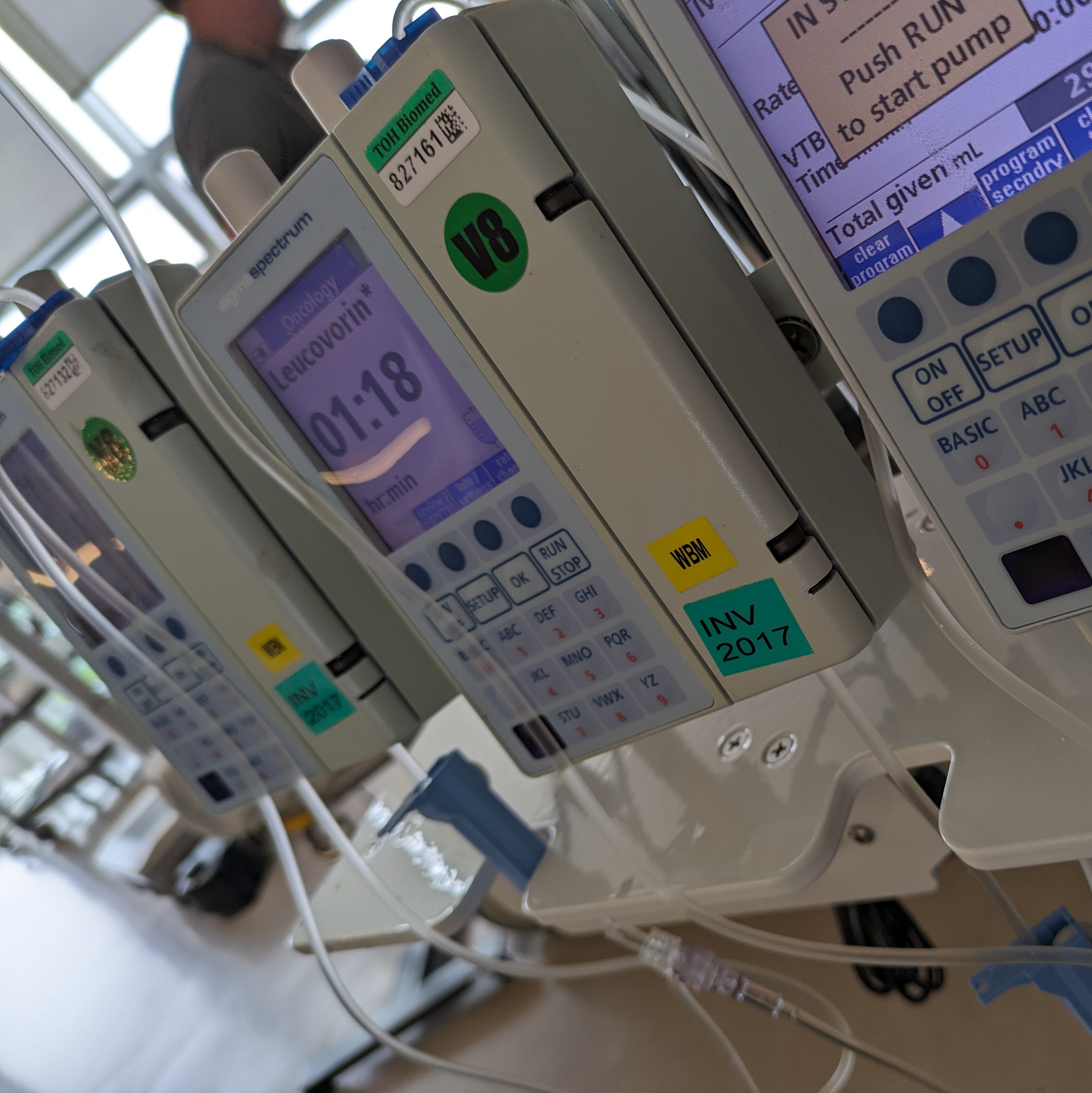
Set boundaries

Early on, I set my boundaries with people. I explained that my approach isn’t to keep everything positive. This is not a bluebirds and rainbows situation. My approach has been one of practicalities, with what I call a realistic positivism.

I hope this works out to be the best-case scenario. And at the same time, I know that it might be the worst-case scenario. Pretending that it could only have a positive outcome isn’t helpful to me. I have to acknowledge the potential negatives of this because there are practical things that need to be dealt with. It also doesn’t work for me mentally to pretend that everything is bluebirds and rainbows. In my conversations with the nurses and doctors, I tell them I want the good, the bad and the ugly. That way I can set realistic expectations and be better prepared to handle what comes.

I let people know this right out the gate. I even told them if they don’t know what to say, they can just say, “This really sucks. I’m sorry you have to go through it.” That’s all. No grand, eloquent philosophical statements. Just reality cuz it does suck and I do have to go through it.

I also did some research and provided them with links to info that might help them because even though I’m the one with cancer, it’s also tough for people who have a friend or family member with cancer. I wanted to make it as easy as possible for them to get info they might need on their own journey with this.

At the same time, I was clear that I wasn’t going to be able to hand-hold them the whole way. I need to focus on my own health and needs. I try to be respectful of where they are and what they might be going through with this, but ultimately it’s not my responsibility to help them through it. My focus has to be on me right now.

Make communicating updates easy on yourself

Within the first week after being diagnosed, I set up a couple of email distribution lists and that’s how I keep everybody up to date on the different stages and what’s going on with me at any given time. That way I don’t have to repeat myself a million times by telling everybody the same thing on an individual basis.

That has helped tremendously! And the feedback has been really positive. I’ve not held much back about symptoms (even the icky ones, and with rectal cancer, there are definitely ICKY symptoms and treatment side effects!) so everybody really knows what’s going on. So many people have told me how much they appreciate the details I have provided. They have learned so much because of what I’ve shared.

Setting your own boundaries and using email distribution lists might be really helpful for you, too. Don’t be shy about sharing.

NOTE: I did give people the option to opt out of the updates if they weren’t able to handle the details I provided.

Have things to do to keep occupied

I have a bunch of different crafting hobbies that help keep me sane. I’ve been off work since March 15 and being able to dip in and out of my crafting, according to how I feel at any given time, has been really helpful for me.

Mostly I make cards – greeting cards. But when I was going through radiation (28 fractions over about 7 weeks), I started making little folders for people to put their radiation appointment schedules in. They are printed on regular printer paper and if you are only having a small few radiation treatments, they’d be fine. But I knew that pulling mine in and out of my purse every weekday for several weeks was going to put some serious wear and tear (literally) on it, so I used some of my supplies to make a little folder for myself.

It worked such a treat that I thought other people might appreciate having a folder for theirs so I started making them for other people, too! Even though I finished radiation at the end of May, I continue to make them and bring them in. I’ve run into several people who have used them and they have really loved them. The folks at the reception desk always rave about them when I bring new ones in. When people see me with a bunch of them I frequently get, “Are you the lady who makes those? They are great! Thank you so much!”

In addition, making those folders is not just helpful in the “keep busy” sense, but also because I’m doing something for someone else. A bunch of someone elses, in fact! Whenever we do things for other people, whatever kind of service it is, it automatically helps us, too! You get out of your own head for a while and feel good about what you are doing. Win win!

Get out in nature

I have a few favourite spots that I really enjoy in the city. I make it a habit to go there fairly regularly. Even if the weather isn’t great or conducive to my specific chemo side effects, I still go there, even if all I can do is sit in the car with the window open. The sound of the wind in the trees, looking out over the water… it’s an amazing kind of therapy!

The main picture in this post is of Hog’s Back Falls in the middle of Ottawa. It’s a beautiful place to go. Anywhere with water is my happy spot. 🙂

Look for the positives

I started decades ago to develop the habit of consciously looking for the positive in things – the silver linings, if you will. This is another skill that has really helped me these last several months.

One of the most positive things I have found is that I have developed a much better understanding of what other people must go through during a cancer journey. I feel I have much more empathy for people now. I am SO grateful for that.

I have also gained an understanding of the importance of private donations to different medical institutions. That may seem like a small thing, but walking into a beautiful building that doesn’t feel at all like it’s a place for really sick people has such a huge positive impact on your overall wellbeing. That is due in large part to all the private donations people have made.

I would be remiss to not mention my gratitude for the people in my life. I have been brought to tears multiple times with gratitude for them. I am floored on a regular basis by how much support I have.

These are just a few examples of things I am grateful for in this cancer journey. I could list everything I am grateful for, but that would probably be a book, not a blog post!

Develop an attitude of gratitude

I’m also grateful, weird as it may sound, to be grateful. I have known several people over the course of my life who live in negativity. They don’t appear to even know how to look for good things in their lives. I can’t imagine going through something like this with a huge cloud like that hanging over me. Developing an “attitude of gratitude” early in my life has been such a blessing and help in so many parts of my life, including this particular challenge.

If you find that your brain tends to lean to the negative, you might want to start practicing to look for the good every day. You could keep a gratitude journal, for example. Start small – list 3 things each day that were positive. You can gradually expand the list to include more things or to include a statement or two about why they stuck out to you as positive that day.

That said, it can be hard to get your brain to start looking for things to be grateful for. Especially if you’ve spent your life focusing on more negative things – the things you don’t have rather than the things you do have. It probably will be a bit of a challenge.

But I promise you that the more you make a conscious effort to look for positive things, the more you will find. Eventually it will become more automatic. On top of that, once you get there, living in a positive headspace is much more pleasant than living in a negative one.

However, the purpose isn’t to deny that there are negative things going on in your life. The purpose, for me at least, is to provide some balance for the negative stuff.

My cancer and its treatments, drugs, side effects, etc. etc. etc., have been awful. When one of my radiation doctors asked if the skin had started yet to slough off of my derriere (from the radiation burns)…well, I knew I wasn’t in Kansas anymore.

There’ve been pain, tears, crazy draining fatigue, and much more that would go in the negative column. And it’s not over yet. But because I have a whole list of things in the positive column, I can deal with the negatives and even say I have had many moments of joy along the way, too.

A faith-based approach

Finally, a huge help to me has been my faith. I know that’s not everybody’s bag, and I totally respect that. For me, though, it has been very helpful. It has been the thing that has grounded me right from the start. Prayer (or meditation, if you prefer) is where I find strength and inspiration.

It’s also the place I can totally let go and express all of my fears, concerns, etc. without any fear of judgment or someone saying, “Just stay positive” because they don’t know what else to say or maybe they genuinely think it’s actually possible to stay positive all the time.

Obviously loads of people go through serious health concerns without having a basis in faith of any kind so I’m not saying it’s necessary in general. I’m just saying that, for me it has been a critical part of being able to go through this journey with the perspective I have had.

As I mentioned, it grounds me. There are times that my brain wants to go in a million different directions of possibilities of where this cancer can take me. And, being an anxiety brain, those directions are generally negative. Being grounded in my faith takes me out of that cycle and brings calm and peace. That alone means the world to me.

Find what works for you

If you used to be involved in a religious community, haven’t been involved for a while and think you might find it helpful in your cancer journey, it might be a good time to go back to that community. Alternatively, you might be interested in checking out other faith communities to see what might meet your needs at this stage in your life.

If you aren’t a faith-based person, you might find some help through the scary moments by looking into different meditation techniques. There are all kinds of meditations out there. You will likely find one that fits you and your life. I have an app on my tablet that I absolutely love. Unfortunately, it’s no longer available or I’d definitely recommend it.

The app I have has several different meditations included. Some are a series of meditations (7-day programs) and some are stand-alone sessions on different topics like stress, sleep, etc. They also are for different lengths of time, ranging from 7 minutes to 30 minutes. I imagine you would be able to find something similar that will work for you.

Therapy and counselling are also options where you can learn techniques to help you through this, and other, challenging periods in your life.

Conclusion

While these are all things that have been helping me as I move through my experience with cancer, it is important to remember that all of our journeys, through cancer and through life, are individual and different. What has worked for me might not work for you and vice versa.

Maybe one of these ideas will resonate with you or simply give you a place to start as you build your own toolbox.

Also, if you have other suggestions that you have found helpful, please share them in the comments below!

Resources

Here are some resources that are also applicable to this post:


If you enjoyed this post and would like to read more, don’t forget to follow!

2 Comments

Chemo cycle 1: My journey with cancer (Part 5)

My chemo schedule

So the first week of chemo is done and it was a very educational one, if also a tough one (in not the ways I expected).

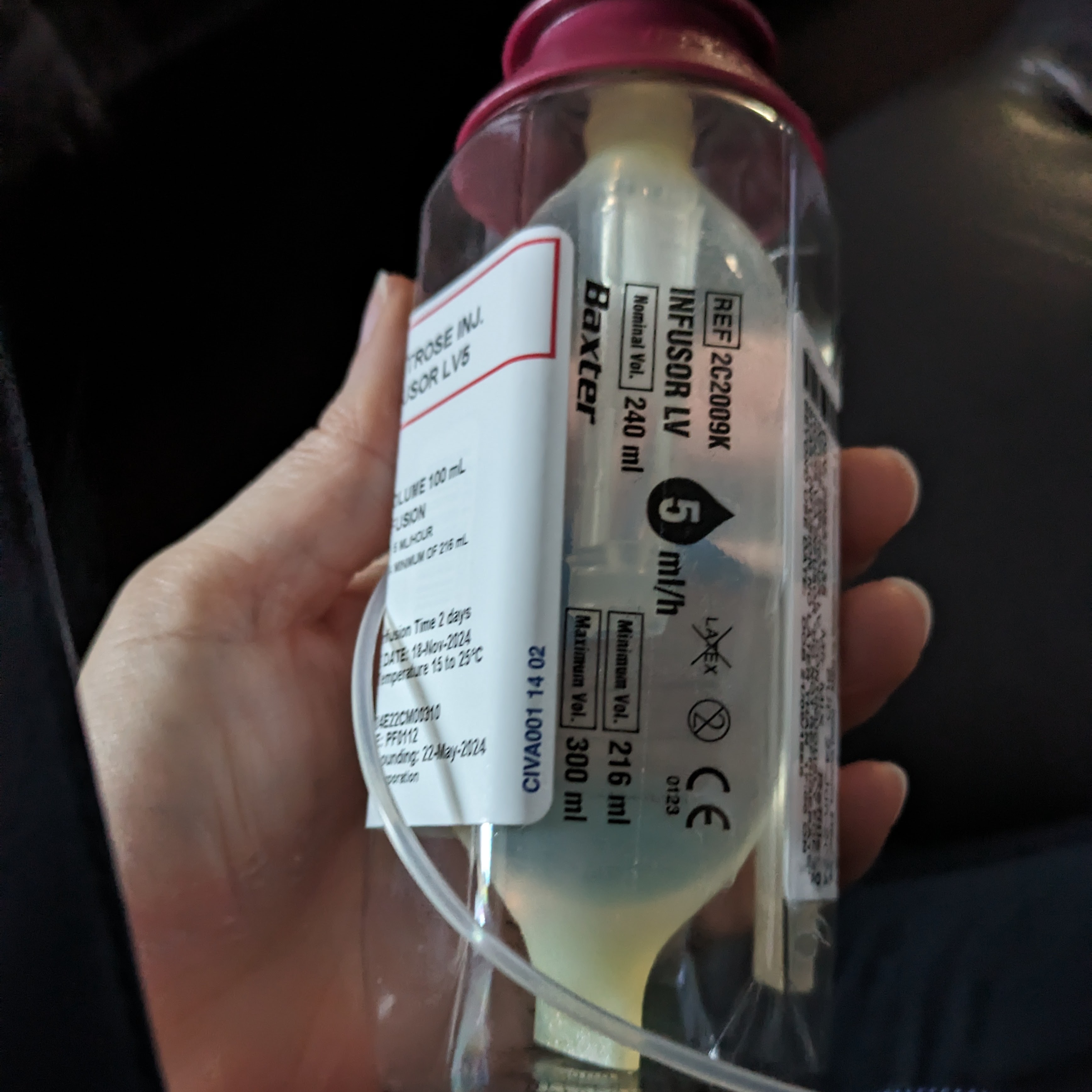
I learned that I am slated for 5 months (12 cycles) of chemo, rather than 4 months. (“Cycle” is what they refer to each 2-week period of chemo. For me: Day 1 is onsite for a few hours; Days 2-3 are at home with a bottle infusing additional chemo. Days 4-11 are for recovery.) Provided we are able to maintain the every-two-week schedule, the 12th one will be at the end of November. Obviously, I want whatever they think is needed to throw at this tumour, but it did throw me for a bit of a loop having an extra month tacked on there.

I only found it out by asking two nurses during the infusion session on Monday. That’s a bit odd. It was very clear at the start of radiation that there would be 28 of those, so I’m not sure why the details of the chemo plan weren’t so clear. I did previously ask a couple of times in my previous touchpoints with the doctor to confirm that it was “4 months of chemo” and she said yes. Maybe they don’t want people to feel overwhelmed? Not sure. Not that it ultimately makes a big difference, but it does help for wrapping your head around things and trying to figure out logistics and such.

Anyway…I’m glad I asked…at least now I know.

My first onsite infusion

The onsite stuff was fine Monday morning. As usual, all the staff were fabulous. Very kind, very helpful and very informative. I brought a back pack with a book, puzzles, tablet, water, etc. I also ordered a little lap desk from Amazon that arrived the next day and will be part of my chemo kit for the next onsite day. I was only there for just over 3 hours, so I can’t see me needing more than that for entertainment purposes

I did learn, though, that I need to bring snacks with me to help prevent nausea. I would have thought food might make nausea worse, so I didn’t bring anything other than water. But they provided me with some crackers, peanut butter and jam, which was great.

I have to say, though, that the lead up to it was a bit stressful. I wasn’t ready for it. I don’t know why. I knew it was coming, but when the PICC line installation was scheduled it through me for a loop. Then the community health nurse called with an appointment to remove the bottle – before even the chemo was scheduled! And then the call came for the chemo appointment. All of a sudden everything became very real. How dumb is that? The symptoms from the radiation where DEFINITELY real. But somehow chemo and its accompanying side-effects made it all seem more real. Maybe it’s all the horror stories we hear about it. I don’t know. But I was quite stressed about it all.

Also…I know once chemo is done, then we’ll find out if it all worked – or not. I’m not dwelling on the “or not”, but it’s a possibility and I think that as long as the chemo wasn’t happening, then the finding out was far enough away. And now it’s not. It’s all that stuff that goes on in the back of your mind, you know? In some ways, that extra month is a blessing, I guess! 🙂

In any event, I was so stressed about it that there were a couple of times during the onsite that I got a bit teary when answering some of the nurse’s questions. Another kind lady. I’ve just been a mess lately.

In addition to the heavy-duty anti-nausea pills I have to take twice on the day of the onsite chemo, there’s another one that they give me onsite, too. It’s a steroid and the nurse (Brenda) explained that it might cause insomnia. She said that since my session was earlier in the day, though, it might not affect me. Spoiler alert: It did.

Getting my Little Buddy

When the onsite infusion was done, they disconnected me from that and then connected me to my Little Buddy – the bottle that would continue infusing for the next couple of days. 

I expected the bottle to be a bit more of an inconvenience, but it wasn’t. It was also fairly easy to deal with in bed as it slides around easily enough of its belt.

Symptoms/reactions

Symptoms-wise, I was very fortunate that I didn’t have to deal with nausea this week, but there were a few hiccups. I felt a little coming on yesterday and took one of the non-heavy-duty pills to prevent it from getting worse.

As I alluded to earlier, sleep was elusive. I hadn’t slept well Fri, Sat or Sun because the PICC line area was still quite tender, but Monday and Tuesday night I really didn’t sleep. I don’t mean “didn’t sleep well”…I mean I didn’t sleep. I dropped off a few times for 5-10 minutes, but nothing deep and nothing even close to restorative. All the snippets cobbled together Monday night might have totalled about 1 hour and Tuesday, being slightly better, maybe 2 hours. But that’s not a solid 1 hour or 2 hours. That’s little snippets added up. I was awake almost the entirety of both nights. Needless to say, by Wednesday I was a bit of a mess.

On top of that (sorry…more bowel stuff!), I also developed more bowel issues, VERY unlike my normal. I had really hoped that my painful BM situation would be resolved post-radiation. Apparently not. No BMs Monday or Tuesday. Tuesday night I made the mistake (so I learned Wednesday) of taking a laxative, but what I really should have done was taken a stool softener. (Word to the wise: a laxative is NOT helpful when you are impacted!) Thankfully, I have access to a nursing phone line and Wednesday morning I was able to get help from a nurse who advised me to get some Restoralax (softener) and a more gentle laxative. I bought a HUGE bottle of the former at my pharmacy when I was on my way to the appointment to remove my Little Buddy. 

You don’t need or want the details, I’m sure, so I’ll skip along. Suffice to say, I had no idea how absolutely painful it could be and was BEYOND happy once it was resolved later than evening. It made me think of Dad who had constipation issues just before he passed. I felt for him in that moment…how that must have felt for him. Bless his heart. 

Other symptoms I had were, as promised, the reactions to cold. My main kitchen counter is full of things coming to room temperature so that I can eat or drink them. Even then, I might still have a reaction. Monday evening, for example, I was drinking some vegetable juice, which had been out for hours, and when I drank the last mouthful, I felt a scratching in my throat. Having forgotten the reaction thing, I wondered if the glass had been broken and maybe I swallowed some glass. On inspection, there was nothing there.

The next day, when I drank some room-temperature Boost, I noticed the same thing and THEN I remembered one of the nurses having mentioned that it could feel like swallowing glass. Ahhhhh…OK. It wasn’t painful…just very odd. So even if something is room temp now, I try to swish it around in my mouth a bit before swallowing to warm it up even more. 

Today when out doing errands, I had the pins-and-needles in my fingers where the car AC was blowing on them. That was weird because I didn’t have that reaction any other time this week when in the car, but there it was! So I adjusted the vents. First I turned the air off, but it was too warm and I had to put it back on. Just not directly on me. 

I’ve also had quite a bit of fatigue this week. Mostly, I think, from the lack of sleep, but probably augmented by the chemo. I have had a hard time getting things done. My place is a mess. I tidy up one area, and feel great about accomplishing something (even so minor) and then turn around to see the next spot that has an explosion of stuff on it. There goes the feeling of accomplishment!

With the GI issues, I have been really struggling to eat, which is definitely not good. If I lose too much weight within a 2-week period that could impact whether or not they can do the next cycle of treatment because all the doses are calibrated to my height and weight and such.

I’m having a struggle figuring all the food stuff out again…I don’t want a repeat of the first half of this week and at the same time I can’t be afraid to eat. Jody said to eat whatever I want…now’s not the time to worry about healthy foods or whatever. Mind you, a lot of the healthy stuff most cancer people can/should eat, I can’t because of the fibre, so that’s out! And there isn’t even really anything that I WANT to eat besides an occasional McDonald’s egg BLT (probably the least offensive thing on their menu, health-wise…ha ha ha). English muffin, egg, small bit of bacon, lettuce and tomato. (Only bit of fresh vegge I’ve eaten in weeks, TBH.) So at least I still enjoy that!

Saying good-bye to my Little Buddy

The bottle removal process Wednesday afternoon was fine. The community health clinic is very close by, which is great. The only issues were related to the fact that I was totally exhausted by that point and the BM issues.

At one point, I felt a wave of nausea come over me – not to the point of vomiting, but almost passing out. Jody (one of the nurses) said when I mentioned I wasn’t feeling well, “Yes! You just went very pale all of a sudden!” Given how pale I already am to start with, I can only imagine how pale I must have been for her to have been able to remark it!

She very kindly put a cold cloth on my forehead, face and the back of my neck, attributing it to my vagus nerve. They were so kind. Nobody enjoys being seen in such vulnerability so such kindnesses are even more meaningful.

A couple of bright spots this week

Yesterday a knock came to the door and when I answered it, there was a delivery guy with a lovely edible arrangement! It was from my boss Fred! (I’m off work, but he keeps in touch regularly, which I appreciate.) I can’t eat most of it because of the fibre, but it was sure a beautiful bright spot this week. Plus, I have wanted to try watermelon – it’s mostly water, so it might be fine – and I also want to try at least one chocolate-covered strawberry. But the pineapple and mango are too fibrous for sure and my friend Shamima will help by appreciating those. 🙂

Then today, my friend and former colleague Brenda sent me a gift of two aromatherapy candles that have jewellery in them when they melt! One of them I might not be able to use (because of scent issues I have – boy, I’m hard to please!!!), but it will probably be perfect in the spare bedroom. The other one smells divine and hopefully will not cause any issues. Either way, I’m using them!

The rest of this cycle

Today’s plan is to cook up a batch of meat sauce. I can have that with plain pasta. Nurses have said I need to go high-calorie to stop losing weight, so I should add things like cheese, peanut butter, cream cheese, sour cream, meats, etc. to things as much as possible. I also want to boil a bunch of eggs and have them on hand as easy protein/calorie grabs. But that might not happen today.

In addition to the learning about this whole process, it has also been educational about the difficulties of doing this when you live alone. There wasn’t anything in particular I could have asked someone to come do for me, but I tell ya…there have been a couple of times when it would have been nice to flop down next to someone and just sob on their shoulder. At the same time, I am also very grateful that I don’t have to try to take care of other people while going through this.

This is week 1 of the first cycle. Next week should be better. If I can eat and sleep, I’m sure they will be. Symptoms are cumulative, so things will continue to mount. I need to wrap my head around all that and get ready. But for today, it’s just going to be a sad day and I’m going to cry for a while. I’m not saying that for pity comments – I’m saying it only, as with this whole endeavour, to be as honest about this process as possible in case it’s helpful to someone else. Maintaining a positive attitude doesn’t always look like smiles and bluebirds and rainbows. I haven’t had a cry day for a while, so this is going to be it!

That said, despite the overall sad tone to this post, please know that I know I am loved and am blessed to be surrounded by wonderful, caring people. And not just because of unexpected gifts. There are so many kindnesses, large and small, that people do for me. I truly am blessed.<3

Resources

Some links with more info:


If you enjoyed this post and would like to read more, don’t forget to follow!

3 Comments

More on the mental challenges – My journey with cancer (Part 4)

Introduction

If you’ve been following along, you know that I was diagnosed in February this year with stage 3 rectal cancer. I’ve been writing about it in the hopes that perhaps sharing various aspects of my experience might be helpful to someone else who may be going through something similar, or to someone who has a loved one facing a similar challenge.

I had planned on this post being the one where I talk more in-depth about the mental challenges I have been having since my diagnosis, but the “in-depth” part is proving to be a bit too much of a challenge right now so while I will discuss it, it won’t be in as much detail as I had hoped.

The challenge with writing this post

Even though writing has a therapeutic effect for me, I just could not sit down and write this post when I originally planned to, about 2 weeks or so ago. I initially thought it would be fairly easy–I would just take a lot of the info I had included in my insurance benefits application and use that here. Great idea–in principle. But writing that application really took the good out of me.

I had avoided it for literally weeks. Every time I even thought about it, I’d start to get all panicky about it. Difficulty breathing, tears–the whole shebang. The week that I finally sat down and did it (May 24), I had to try on three different days before I could actually get through it. I cried my way through the whole thing. It stressed me out beyond belief. I was surrounded by a mountain of tissues by the time I sent the email off to them. I kept saying (to myself and out loud to nobody), “If I was able to do this kind of thing, I’d still be at work!”

It wasn’t the kind of thing I could ask someone else to do for me, either. I was the only one with the info, so I was the only one who could do it.

The only way I could get through it was to give myself permission to not do any rereading or editing of the main questions that dealt with the illness and the mental challenges I have been facing. I’m normally big on editing. And given the importance of that kind of document, editing to make sure it includes all the necessary information, it really should have been reviewed and edited. But it took SO much out of me just to write it all out there was no way I could put myself through that again by rereading and trying to make sure it made sense.

I was able to review and deal with the questions that dealt with factual details – dates of doctors’ appointments, names of doctors, reasons for visits, medications, treatments, etc. It was exhausting to gather all that information, but I was able to break it down into smaller chunks and do it question by question. Between my Google calendar and my personal journal, I was able to dig up most of the info they were asking for. Serious shout out to journal keeping, btw. I don’t know how I would have completed that form without mine as a lot of things didn’t go into the calendar and I was in no shape to pull any of those details from my brain.

But the question with the details about the mental stuff? Nope. Could not go back through it. I spewed onto the page (7 pages, in fact) and crossed my fingers when I sent it off. It is what it is.

So to go back into that form and go through that info to see what would fit into a blog post? Yeah…still can’t do it. I know it’s important – the big reason I’m documenting this experience on here is in case it’s helpful to someone else who might be going through this themselves, or who might know and love someone who is experiencing it. I just can’t go there right now.

Instead, I will just give some highlights as to what the problems are that I’ve been experiencing, some of which I might have already mentioned in the previous posts.

Acknowledging the need to step away from work

I for sure talked in the last post about how I was off work the first week after I found out about the diagnosis. The food thing was the biggest challenge that week. Or rather, it was the biggest symptom of the challenges I was going through. By the end of that first week, my plan was to continue working for sure at least up to the time when treatments started, perhaps longer depending on what those treatments were going to be and how my body reacted to them. I was happy to be returning to work the following week.

Over the next three weeks, though, it became very clear to me that my brain was not on the same page as I was. I was having a lot of difficulty concentrating on what I was doing. I couldn’t understand a lot of what I was reading. I often found myself sitting in front of the computer reading the same paragraph multiple times and not having a clue what it was really saying.

That has happened before – probably to all of us. Every now and then you have a day where things just aren’t clicking. But every day had become that. I couldn’t understand things. I wasn’t coherent in my thoughts or how to organize myself to get things done. If there was one word people I work with would use to describe it, it’s organized.

We use Teams at work and when you are logged on and available, there is a little green dot by your avatar. By mid-way through the third week, I finally clued in to the fact that I was barely more than a green dot. I was logged in. I was sitting at my desk. But I wasn’t doing much. I was definitely not earning my paycheque.

My brain wasn’t working the way I was used to – it wouldn’t do what I wanted it to and, more and more as I got into this, I was finding that I couldn’t find a reason why that mattered. At that point, I still thought I was likely stage 4 cancer and incurable. Reading 100-page business intelligence analysis reports and making recommendations as to next steps to take for our work was quite low on my “why should I care” list. I knew intellectually that it was important, but I couldn’t bring myself to care.

I was also less and less in control of my emotions. I could feel totally fine for a few hours and then something small would happen and I would be in tears. If I didn’t have a meeting scheduled, that was OK–or at least OK enough as I could hide it and it didn’t impact anybody else. But I couldn’t guarantee it wouldn’t happen in meetings over and over again. In fact, I could guarantee the opposite because it had happened.

It was really hard the day that I realized the old work me wasn’t me anymore. My brain wasn’t able to perform the way I was used to and my emotions were out of control. I had been trying to deny it and that just added more strain. I knew I had to step back–that would be my last week at work for a while.

Once I had acknowledged that need and went with it, I felt so much lighter. There was so much about my life that I had no control over anymore. The only thing I had control of to take off my plate and make things more manageable for me was work. Doing that made a world of difference.

I need to add here that I have a VERY supportive group of people I work with. My manager has been wonderfully supportive, as have my colleagues. I am truly blessed in that regard! There was no pressure put on me by anyone else. I knew myself that I wasn’t able to continue as I had been and that I needed to stop working–not just because of the impact to my work, but also the impact to myself.

Where things are now

My brain still doesn’t function the same as it used to. I’ve always been the person who gets things done and helps other people get things done. At work, I’m organized out the wazoo. I’m hoping it will come back once I’m through all this. I’m operating on the assumption that it will. It will break my heart if it doesn’t. But that’s a worry for a different day.

I know that the reasons my brain is struggling are totally legitimate and I try to give myself some grace in that–to not put unrealistic expectations on it or myself. (Yes…it’s weird to talk as though my brain and I are separate, but sometimes it feels that way.)

I still struggle with the thought of, “Why are so many other people able to function so normally through cancer diagnosis and treatment and I’m not?” I know that is an unfair question to ask, but it’s the reality of the situation. I usually shoo it away, ban it to some dark box or cabinet if I’m not able to completely sweep it out. Invariably it creeps in again every now and then, only to be shooed away as quickly as I recognize it for what it is.

What am I doing about it all? That, I think, will need to be another post entirely. This one has gone on long enough and both you and I have other things to do! So stay tuned for the next one, which, I think, will be much easier and more pleasant to write about.

Be kind to yourself

I am sorry I am not going as deeply into things as I had originally planned. As I say, I’m just not there. Maybe this will be of some help, though, to someone somewhere along the line!

The main take-away is this: Whatever your challenge (be it health or otherwise), however you feel is how you feel. Give yourself some grace and kindness. Do what you need to help yourself through it–don’t passively give in to it all–but give yourself grace. We all have challenges and we all have different strengths and skillsets to deal with them. As such, we will all face and deal with them differently. Don’t give the unkind voices the space in your head that they want. They are not deserving of that space and you, my friend, are not deserving of the unkindness. Shoo them away every time they appear.

Till next time…

Resources

Below are some resources on the topics mentioned above that might be helpful to you or someone you love. There are many more available. Please also consider searching resources that are closer to you and specific to your individual needs. The important thing is that you know you don’t have to struggle alone – there is help.


If you enjoyed this post and would like to read more, don’t forget to follow!


1 Comment

The mental side of things – My journey with cancer (Part 3)

The first two posts of this series told you mainly about the facts of this journey – how I found out, what it is, what the treatment plan is, etc. This post is the first to focus on the mental side of it. I’m going to try to be as honest as I can about the experience, which will probably be difficult at times. Thankfully, I keep a journal so I’ll be able to refer back to it to talk about exactly how I was feeling at different times so far.

WARNING:

A large part of this post talks about food issues which may be triggering for some. Please do not continue to read if you think that may be the case for you.

Combatting the “Is it just me?” feeling

While I know several people who have or have had cancer, none of them have ever talked about any serious mental struggles they have had with it. The focus has always been on any physical side effects. Any allusion to mental struggles has been minimal, if even mentioned at all.

The result is that in the last almost three months there have been many moments when I have wondered why I am having such a challenging time mentally when nobody else seems to have experienced serious mental struggles with their own experiences. I mean, that’s great, if that’s the case. But it sure has left me feeling considerably “less than” because it has been a serious challenge for me.

I know…before you say it: You should never, ever, ever compare your experience with something to somebody else’s experience with it. The logical side of my brain knows that’s true. It doesn’t stop the thought from popping up every now and then, though.

One thing I’ve done to quiet that mental monster and its ravings is to do some reading. I have a BUNCH of books and booklets I’ve taken from the cancer centre and I’ve done some online research. Unanimously, from what I’ve been reading, having different mental health challenges when dealing with cancer (or any serious health problem, or other life challenge) is very normal. Therefore: Shut yer gob, mental monster!

So what gives? Why do I feel like I’m the only one I know who is struggling? In all likelihood it’s that, as with mental health challenges in general, it’s just not talked about. People – the people experiencing those challenges and the people around them – may just be too uncomfortable talking about it. Just like physical symptoms, mental health symptoms vary greatly from person to person.

And, as we all know, even though there have been great strides in the past few years with normalizing mental health issues, there is still a long ways to go. It can, for many people, still be awkward and uncomfortable. We can talk about the fatigue or skin issues from radiation, but talk about what’s happening in our heads? Nah ah. Not gonna do it.

If that’s indeed the case, I’m trying to do my part to rip down that curtain of embarrassment and shame and shine a big ol’ flashlight on it. I’m talking about my mental health struggles all over the place. Almost any time someone asks how I’m doing or if there are any side effects to treatment, I let them know both the physical and mental challenges I am having. I don’t do it (hopefully!) in a “Woe is me…life is so hard…please pity me” way. (That’s a short cut to getting people to stop asking if there ever was one!)

Rather, I try to do it in a way that just makes it more normal – both for myself (so I don’t feel I have to hide that bit in a closet) and for the people around me, as well as my medical team. “My skin is starting to get a bit itchy in the radiation area, I’m tired really easily, and my emotions are all over the place.” I don’t spend the whole conversation dwelling on it. We talk about it and then move on to other things – it is just built in as a normal part of conversation because it is, now, a normal part of my life.

The mental part of this has actually been the most challenging part for me. Physically, I occasionally have some slight discomfort from the tumour and there have been some increasing, but still mild (so far) side effects from treatment. That might not always be the case, but currently, I am grateful that this is where I am physically. But from day one my head has been done in. I can’t do things I used to be able to do practically in my sleep. I can’t trust myself emotionally.

So I am making sure that I talk about it so that, hopefully, if someone else really struggles mentally and emotionally during their journey, they don’t wonder why nobody else seems to also have had similar such struggles.

If that is you, let me state unequivocally right now: You are not alone. It’s normal.

It’s an awful diagnosis. It spins your world. Or for many of us it does, anyway. Yes, there are probably some people for whom it’s just another day at the doctor’s and, beyond having more medical appointments in their calendar than usual, it’s no big deal for them. And that’s great. It truly is. But for many of us, that’s not the case and that is perfectly normal, too. (A quick Google search will provide you with many legitimate sources to support that.) There is no one-size-fits-all way that we each react to and deal with our cancer diagnoses.

My initial reaction

To say that the diagnosis was and is a huge head trip for me is an understatement. From the very first moment, lying on the colonoscopy table looking at the screen as the doctor paused the camera on the tumour and told me that it was cancer, my head has not been the same and my relationship with food hasn’t been the same.

For the rest of that first day (a Friday) when I found out I felt numb and that was probably a good thing. I knew I needed to pay attention to what the doctor was saying and not being overwhelmed by emotions allowed me to do that. As I said in my journal four hours after I found out, “I was a weird mix of groggy and trying to stay calm so I could listen to what he said.” I also knew myself well enough to correctly predict right after, “But this weekend will be rough.”

I also knew that I needed to let my close circle know. That was only possible because I wasn’t fully feeling it yet. I sent out a few emails to my brothers and sisters-in-law as well as a few very close friends. It was still all very matter of fact in my head in that regard. But just two days later, on the Sunday, I wrote: “I’m a mess. I’m glad I told everybody on Friday while I was numb. I don’t think otherwise anybody but Carol would know. It would be too hard now.”

My unexpected challenge with food

My friend Carol, who had taken me to the colonoscopy, and I had planned on going out to lunch after the treatment for some real food after several days of prepping for the procedure. I wasn’t really up to eating, but I also now had blood work to do because of the cancer. I didn’t want to do it – I just wanted to go home to bed. But Carol encouraged me that it would be best to get it done now and that I should really eat something before the blood work.

So off we went, but when the food came, I couldn’t eat it. I had a bit of the soup and then maybe two or three small bites of potato. It was one of my favourite meals (roast beef) and I still couldn’t get much into me. It likely made no difference for the blood work, but it was at least something.

The rest of the day after she dropped me off, I tried to eat more, but couldn’t. Thankfully, because I had heard that some folks have a little difficulty going back to regular food right after a colonoscopy, I had bought some different fruit and veggie smoothies and made myself drink small amounts of those so that I could at least get some nutrition in.

As I kept trying to make myself eat solid foods, I discovered a whole new issue: Though challenging, I could make myself put the food in my mouth, but I could not make myself swallow it. I would chew it for a little bit, trying to make myself swallow it and then spit it out. Out of a whole meal, I could only make myself swallow maybe three or four bites, but that was it – the rest I spat out or didn’t even get it to my mouth. I knew that was a problem and that I could be heading down a very dangerous path, but I just couldn’t do it.

I couldn’t look at solid food and want to eat it. I mentally associated it with the cancer. It was all associated with the digestive process. The food was going in through the mouth and would eventually come out by the tumour. I couldn’t handle that thought.

Before you say it, I also knew that the fruit/veggie smoothies would also come out the same way, but there was no time involved with them. Once I got the bottle to my mouth, I could quickly make myself drink a few swigs before my brain could stop me. But the whole chewing process…nope. Couldn’t get past that.

I even tried some of my favourite junk foods – not for nutritional value, obviously, but to hopefully get me past this block that was set up. It didn’t help. Nothing had any flavour. I might as well have been chewing on cardboard for all the enticement any of it offered. I still had that alarm going off in my head, warning me that this was a dangerous path to be going down. People don’t just chew their food and spit it out on a regular basis. If I wasn’t careful, I knew this could really develop into a very bad illness on its own.

On the Tuesday following the diagnosis, I wrote: “On another note…the eating isn’t getting better. Not solids. I’m fine with juices & smoothies, but am still mentally struggling with solids. I bought some Mary Brown’s yesterday & 2/3 of it, at least, went in the trash. I thought the flavour might inspire some pleasure for it, but nope. I mostly chewed & spat it out – forcing myself to at least swallow some of the chicken. It’s very bizarre.”

Success!

I didn’t give up trying to make myself do it, though. Sometimes I had more success than others. The thing that got me out of it was going out for a quick lunch with a friend of mine. Since the pandemic we had gotten into the habit of occasionally going out for a fast food lunch during the day (we both live in the same building). It allowed us to see and speak with a live human being and also safely get out of the house. We still do it occasionally. I thought, “OK…if I am eating with another person there, I’m not going to be able to spit it out.”

And I was right. I only ordered a couple of the smallest items on the menu and I ate them. I was ecstatic! I hadn’t told her why I had wanted to have lunch that particular day, though. I mean, you don’t just randomly go around saying to people, “Hey I chew my food and spit it out…you wanna come to lunch?” Hardly an appetizing thought. Plus, mental health monsters generally want us to keep our mental health issues under wraps and in the dark. That way we are less likely to address them. And they continue to make us unwell.

After that meal, it was just a matter of reacclimating my system to regular solid food. Thankfully, that whole ordeal only lasted five days before I was out of that habit. But it was rough and scary. It gave me a slight peek into a world where a lot of people with eating disorders live. Even though it was just a very short period of time, it has definitely given me a greater empathy for people with that health issue and how easy it is to develop a seriously unhealthy relationship with food.

And now?

I still don’t eat the same as before – the full enjoyment of food hasn’t come back. But I do eat and I don’t have any chewing/swallowing issues. I know the lack of enjoyment is related to other mental struggles I am going through right now (to be addressed in my next post) and as I work through those things, the joy will likely (hopefully) come back. It’s just not a priority for me at this point. It’s a symptom and not a root problem and focusing on the latter will help with the former.

The whole food episode was not one that I ever expected to encounter so it was quite a surprise to be faced with it. I am very grateful that I was able to recognize the alarms going off in my head during that period of time and that I was able to get myself out of it quickly enough before it really took root.

It’s a great example, too, of how we genuinely don’t know how we are going to react to something until we are faced with it. More often than not, at best we could say how we hope we might react, but until we are faced with something, we really don’t know for sure.

This whole experience has been a great lesson in that, for that matter. It would be nice had I been able to learn those lessons in less life-threatening ways, but there we have it! In any event, I am grateful to see the lessons and the learning and not just the challenges.

On that note, I will close for today with a Dolly Parton quote that seems rather à propos:

“The way I see it, if you want the rainbow, you gotta put up with the rain.”

Resources

Below are some resources on the topics mentioned above that might be helpful to you or someone you love. There are many more available. Please also consider searching resources that are closer to you and specific to your individual needs. The important thing is that you know you don’t have to struggle alone – there is help.


If you enjoyed this post and would like to read more, don’t forget to follow!


2 Comments

I went to a funeral today

Last Friday, on my way out to grab lunch, I checked my texts. I don’t do that very often – I am not even usually in the same room as my cell phone. But I think I was waiting to hear something from someone so I checked at lunch.

There was a message from my friend Marie, telling me that a friend of ours had passed away. For privacy of the family, I will call her Isabelle.

I had to read it several times. I honestly didn’t really understand it. I thought at first that it said that one of Isabelle’s sons had passed away, but after several readings, I got the right of it – Isabelle had passed away and Marie would call me later to give me more details.

It was really hard to grasp. Have you ever had that happen? You know something, but you don’t really KNOW it. It’s like your brain refuses to acknowledge it. Anyway, I had lunch and in a weird state of numbness I worked through the rest of the afternoon.

When Marie and I spoke later, she further explained that Isabelle had died from suicide the weekend before.

Needless to say, that added another dimension to the loss.

I knew she had struggled with mental health issues – it was something that we shared. She had been a great support to me in my struggles – it is always nice to be able to talk to someone who knows what it’s like. I hope I provided the same support to her.

We saw each other 2 or 3 times a year before the pandemic, in addition to keeping in touch on the phone and text. But the pandemic naturally put a stop to the visits. Instead, we talked on the phone a couple of times and texted. The last time we spoke on the phone, several months ago, she was in an upswing. She had loads of good, positive things going on and I was so happy for her.

This week has been a challenge because I’ve been fighting against going down the rabbit hole of “I should have done more. If only I had….” I know that is not a healthy place to go, but it’s hard to completely erase the thought from my head.

A couple of people I’ve talked to have asked the inevitable “I don’t understand…why would somebody do that?”

I know they are in their grief, so I don’t answer, but honestly, I get it. Now…don’t panic. I’m not suicidal. But I understand how someone could be if they have a really bad bout of depression or other mental illness.

From my own experience, I can see becoming tired of fighting it. Even when you are doing all the “right” things (therapy, medication, physical activity, etc etc etc), it doesn’t totally take it away. And it’s e.x.h.a.u.s.t.i.n.g. I can understand how, if it’s really, really bad for someone, they are just too tired to fight it anymore.

Then there’s the “false reality” aspect. Your brain can trick you into believing a reality that is different from actual reality. I’ve experienced it those times when it’s been really bad for me. I think: “I’m a horrible person. I don’t bring anything good to anyone. Nobody really cares one way or another if I’m here or not.” An entire litany of ways I’m a useless bag of flesh.

Thankfully, as I’ve come to know and understand more about my own mental health struggles, the other side of my brain is better able to combat those thoughts and say, “No, Lucy, that’s not true.” I force myself to run through lists of things in my brain that provide proof that the alternate “I’m awful” reality just isn’t true.

To be honest, I think I’m just lucky that I haven’t gotten to a point where both of those things (exhaustion from fighting and alternate negative reality) haven’t both been super bad at the same time, to the point that I accept it as truth. I try to stay vigilant with it so that doesn’t happen.

Naturally, I don’t know that this is what happened for Isabelle. But I can understand how it could.

So, sadly, the illness won this time and I was at her funeral today.